Lesson 52: Asteroids
What does "Orbit" mean?
Asteroids
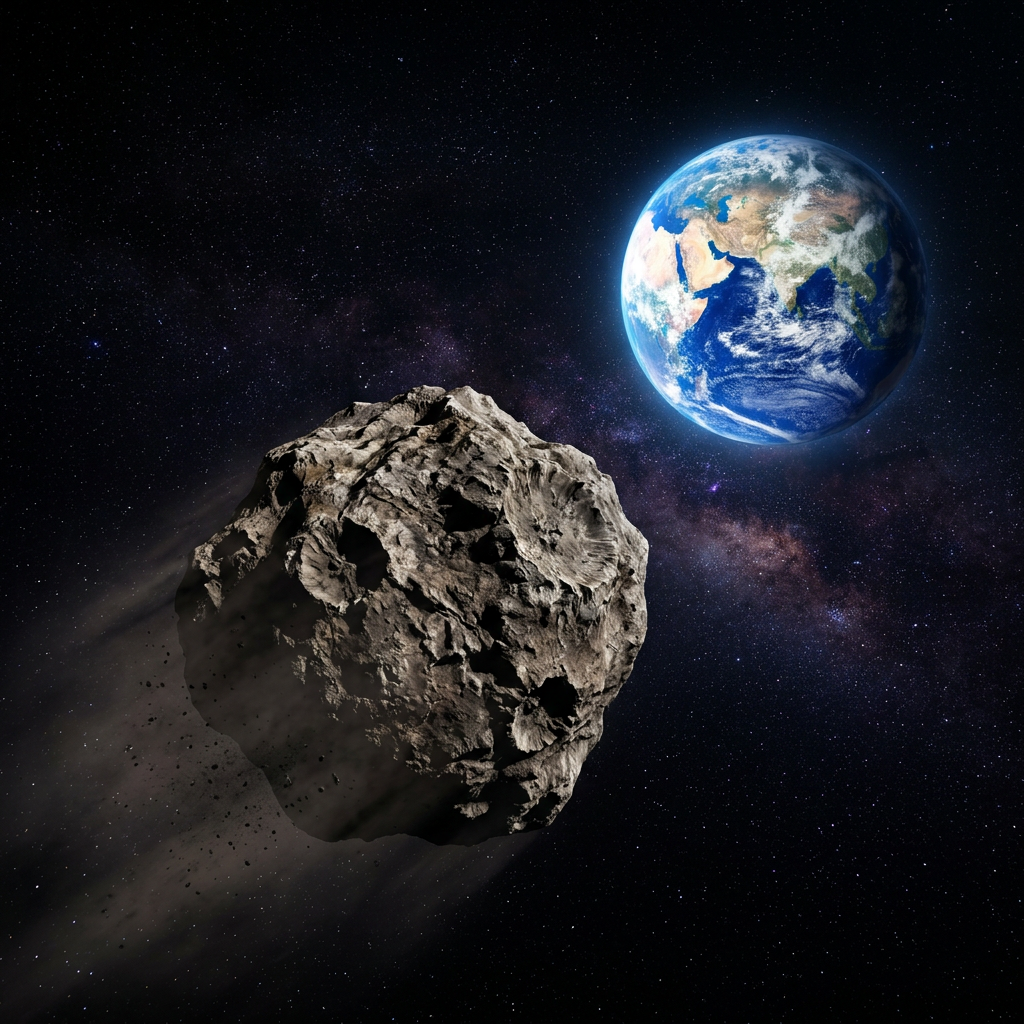
Asteroids are rocky, airless worlds that orbit our sun, but are too small to be called planets. Tens of thousands of these minor planets are gathered in the main asteroid belt, a vast doughnut-shaped ring between the orbits of Mars and Jupiter.
The Threat from Space
While most asteroids stay safely in the asteroid belt, some have orbits that cross Earth's path. These are known as Near-Earth Objects (NEOs). If a large asteroid had hit Earth millions of years ago, it would have caused massive devastation. In fact, scientists believe that if an asteroid hadn't struck the Yucatan Peninsula 66 million years ago, the dinosaurs wouldn't have become extinct.
Close Calls
Throughout history, Earth has experienced several close calls. In 1908, a relatively small asteroid exploded over Tunguska, Siberia. If it had exploded over a populated city, the loss of life would have been catastrophic. If scientists had known about it in advance, they might have been able to warn people, but technology wasn't advanced enough then.
Planetary Defense
Today, space agencies like NASA are actively tracking NEOs. They are developing strategies to deflect any asteroid that might pose a threat. If we had had this technology in the past, we could have prevented many smaller impacts. If a dangerous asteroid were detected today, we would have a much better chance of protecting our planet.
Asteroids are rocky, airless worlds that ___ our sun.
Discussion
Let's talk about the text
No comments yet. Be the first to start the discussion!
💡 Tip: Create a free account to save your progress, track your scores, and get personalized recommendations.